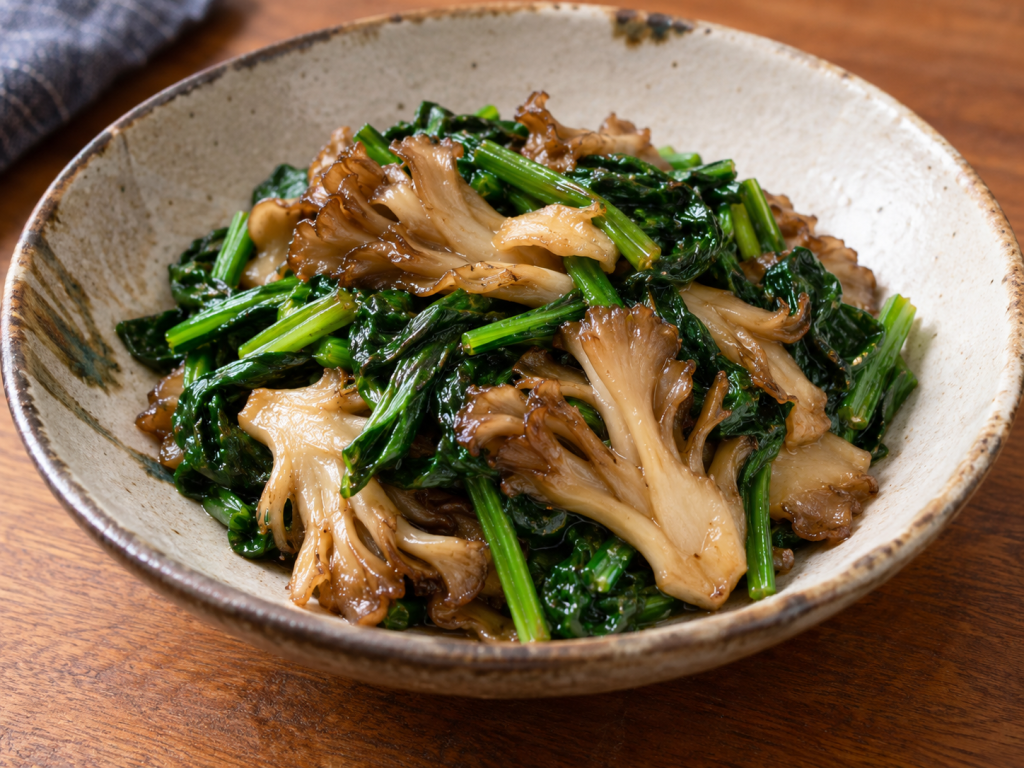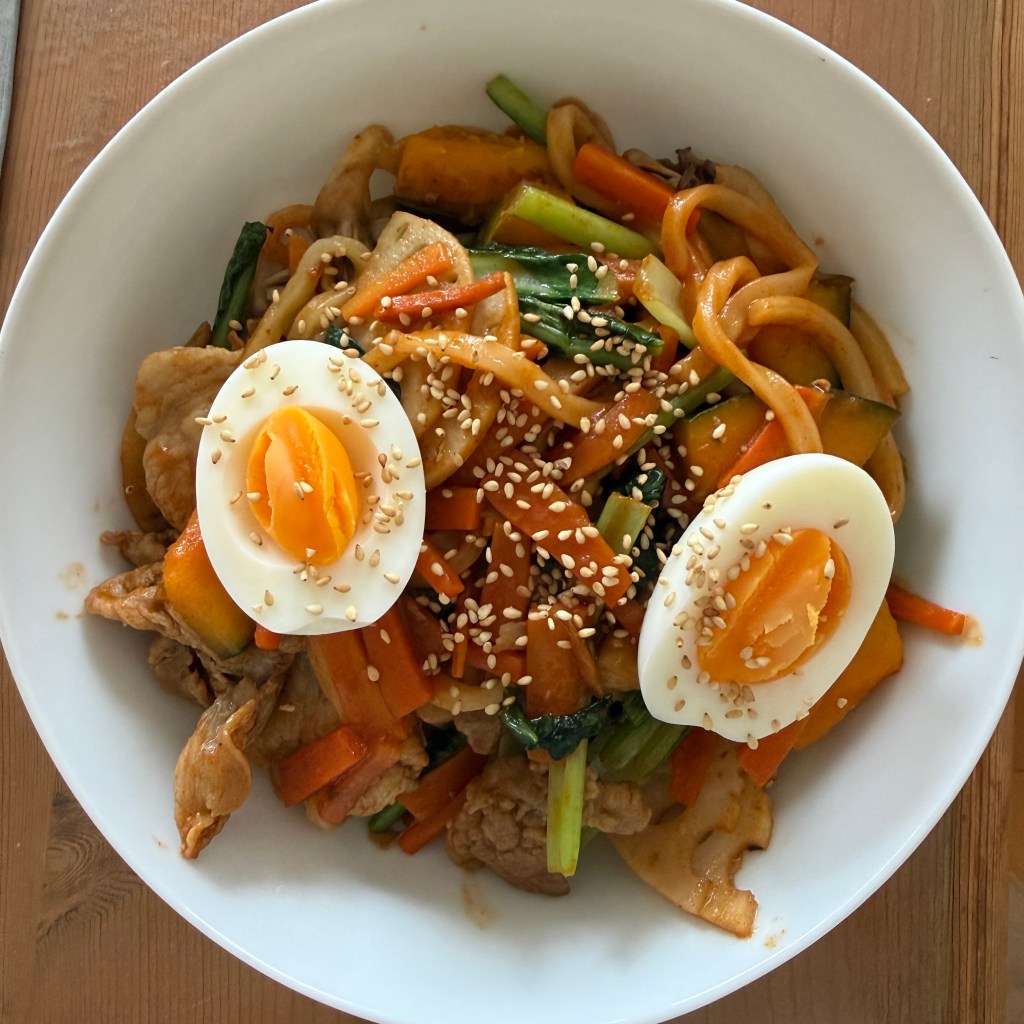
Chewy udon, browned pork and autumn vegetables in a savory, tangy gochujang-sesame glaze. Renkon gives crunch, kabocha brings sweetness, maitake adds earthy depth, and komatsuna keeps the dish fresh and green. A jammy egg makes it a complete, satisfying meal.
Ingredients
2 portions Frozen udon
200g 豚こま切れ肉
2 eggs, soft boiled
Salad oil
100g renkon
100g Kabocha pumpkin
100g (1 pack) Maitake mushrooms
150g Komatsuna
1/2 Carrot
(A) 1 1/2 osaji Gochujang
(A) 1 osaji Soy sauce
(A) 1 osaji Rice vinegar
(A) 2 kosaji Sesame seed oil
(A) 1 kosaji Sugar
(A) Garlic, from tube or grated
(A) 1 osaji Water
Toasted sesame seeds
Thinly sliced negi
Freshly ground black pepper
Preparation
Eggs: Boil for about 7 minutes for jammy yolks, then move immediately to cold water.
Renkon: Cut into 3mm half-moons or quarter-rounds. If holding, place briefly in water; drain and dry well before frying.
Kabocha: Remove seeds and cut into 4–5mm slices, then bite-size pieces. Keep it thin so it cooks through in the pan.
Maitake: Tear into bite-size clusters.
Komatsuna: Cut into roughly 4cm lengths; keep stems and leaves separate.
Carrot: Cut into thin matchsticks.
Sauce: Stir the gochujang, soy sauce, rice vinegar, sesame oil, sugar or honey, garlic and 1 osaji water until smooth.
Steps
| Brown the pork Heat 1 kosaji neutral oil over medium-high heat. Spread the pork into a single layer and let it sit long enough to develop genuine golden-brown edges. Cook until just done, about 3–4 minutes, then transfer to a plate. Leave the flavorful browned bits in the pan. |
| Start the firm vegetables Add the remaining 1 kosaji oil if the pan is dry. Add renkon, carrot and kabocha. Cook over medium to medium-high heat for 3–4 minutes, turning occasionally rather than constantly stirring. The renkon should begin to look translucent at the edges and the kabocha should start softening while still holding its shape. |
| Help stubborn kabocha if needed If the kabocha is still quite firm, add 1 osaji water and cover the pan for about 1 minute. Uncover and let the moisture evaporate completely before continuing. |
| Brown the maitake Add the maitake and spread everything across the pan. Cook for 2–3 minutes without fussing with it constantly so the mushroom edges can become golden and aromatic. Add the komatsuna stems during the final minute. |
| Heat the udon While the vegetables cook, microwave the frozen udon according to the package directions. The noodles should be completely hot and loosened before they enter the frying pan. |
| Bring everything together Add the komatsuna leaves and toss for about 30 seconds. Return the pork and any accumulated juices to the pan, then add the hot udon. Gently toss everything together without crushing the kabocha. |
| Sauce and glaze Stir the sauce again, then pour it around and over the noodles. Turn the heat to medium-high and toss for about 1–2 minutes. The noodles should become glossy red-orange and the sauce should cling rather than pool. If too dry, add 1–2 kosaji water a little at a time. If wet, keep tossing another 30–60 seconds. |
| Taste, finish and serve Taste before adding any extra salt. Divide between two wide bowls or plates. Peel and halve the jammy eggs and place on top. Scatter with toasted sesame seeds and, if you have them, sliced negi or nira. Serve immediately. |
Source
Notes
Do not crowd a small pan. This recipe contains roughly 370–400g vegetables plus 200g pork and two portions of udon. A large pan makes it much easier to brown rather than steam. The two moments worth slowing down for are browning the pork and browning the maitake — those roasted flavors keep the finished dish from tasting like noodles merely tossed with gochujang.The rice vinegar is intentional. It cuts through the sweetness of the kabocha and gochujang and gives the noodles considerably more lift.